
Payment choice and flexibility are of critical importance for dealerships with an eye on long-term growth. This key finding is an overarching theme from a recent survey commissioned by PayJunction, that surveyed 500 U.S. consumers who own a vehicle, possess a credit card, and have visited a dealership within the past 12 months.
The strongest lesson from the data is not that consumers prefer one payment method over another. It's that consumers want options. Whether they choose a credit card, debit card, cash, check, or Buy Now, Pay Later solution depends on their circumstances, financial goals, and stage of life.
Unexpected Repairs Change Consumer Behavior: Cash Flow Flexibility Is King
The survey reinforced something most dealers already know: unexpected repairs are different. Routine maintenance can be planned. A failed transmission, air conditioning repair, or major engine issue cannot. 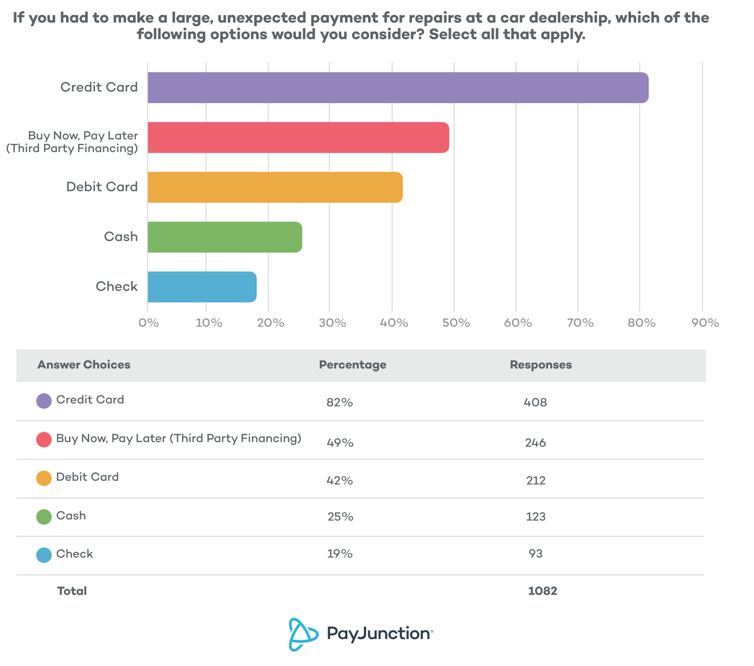
When consumers face an unexpected bill, payment flexibility seems to become even more important.
The majority of respondents (82%) said they would consider using a credit card for a large, unexpected repair expense while nearly half (49%) indicated they would consider Buy Now, Pay Later financing compared to only 25% who said they would consider paying cash.
This finding aligns closely with what dealerships experience every day: one of the biggest challenges in fixed operations is the lost repair order. This is the customer who receives a quote but delays or declines service because of financial constraints. Flexible payment options may help address that challenge by giving customers additional ways to move forward with necessary repairs.
Customers want to preserve liquidity and maintain flexibility during an unplanned financial event.
Strategic dealerships are increasingly viewing payment flexibility, offering both credit card acceptance as well as Buy Now Pay Later, as a tool for reducing lost repair orders, improving repair approval rates, and supporting stronger fixed operations performance.
82% of all customers surveyed indicated they would consider using a credit card for a large, unexpected repair, while 49% indicated they would consider Buy Now, Pay Later (BNPL).
Looking at these results alongside the other survey results, perhaps the most important finding is that consumers appear more willing to change how they pay than where they do business. In other words, freedom of choice matters most. Consumers have clear preferences, but those preferences are not necessarily tied to a single payment method. Instead, the findings suggest consumers value having options and selecting the payment method that best fits their financial circumstances at a given moment. For dealerships, that distinction matters.
A customer paying with a credit card today may choose debit tomorrow. Another may use Buy Now Pay Later (BNPL) for a major repair but prefer a traditional payment method for routine maintenance. The common thread is not loyalty to a specific payment type or complete avoidance of surcharge. It is the desire for flexibility.
This aligns with what many dealerships are already seeing. Payments are no longer simply an operational consideration. They increasingly influence customer experience, advisor efficiency, profitability, and overall dealership performance.
Dealer Takeaway: Dealers who offer both credit card and Buy Now, Pay Later payment options can give customers greater cash flow flexibility when paying for unexpected repairs.
The Rise of Alternative Payment Options: Changing Consumer Expectations
Consumer expectations around payments continue to evolve, especially when it comes to Buy Now Pay Later (BNPL) options. Nearly half of auto dealer customers surveyed (49%) indicated they would consider Buy Now, Pay Later financing for a large, unexpected repair bill.
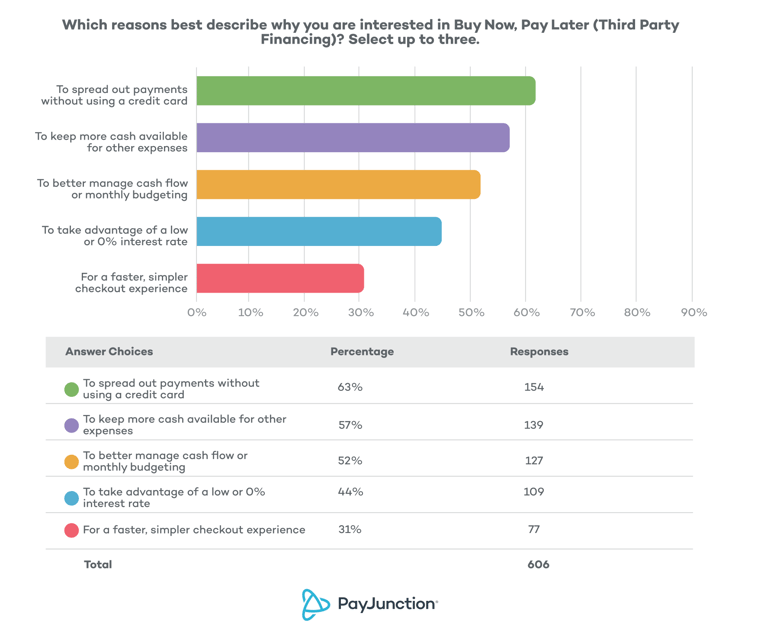 When asked why, the most common responses included spreading payments over time without using a credit card (63%), keeping more cash available for other expenses (57%), and better managing monthly budgets or cash flow (52%).
These findings suggest BNPL is often about flexibility. Consumers are looking for ways to manage large expenses without creating additional financial strain.
The growing generational impact of BNPL is particularly noteworthy. Gen X, Millennials, and Gen Z are all more likely to use BNPL than older consumers (Board of Governors of the Federal Reserve System, 2023). This suggests that BNPL is becoming a mainstream payment method across multiple generations, rather than one used only by young customers.
While payment preferences may evolve over time, the desire for flexibility remains remarkably consistent. For dealerships serving both longtime customers and first-time buyers, payment flexibility may become an increasingly important competitive advantage.
Dealer Takeaway: Offering transparent payment choices, including credit, debit, cash, check, and Buy Now, Pay Later, can help dealerships meet growing customer expectations and improve the overall customer payment experience.
Dealership Customers’ Payment Preferences: The Big Picture
The data suggests consumers don't have a favorite payment method. They have favorite payment outcomes. Sometimes that's earning rewards. Sometimes it's avoiding fees. Sometimes it's preserving cash flow. And technology that promotes freedom of choice allows customers to understand their options and select the payment option that best fits the moment.
Moreover, the perceived “pain” of integrating these new payment options into a dealership is minimal, especially when compared to the potential savings. For example, Andean Chevrolet integrated PayJunction’s SmartSurcharge (including staff training) in just two hours and realized approximately $36,000 in monthly credit card processing cost savings the following month.
The dealerships best positioned for long-term success will be those that recognize payment flexibility is no longer just an operational consideration, it is part of the customer experience. Freedom of payment choice is one of the single biggest levers a dealership can offer to enhance customer loyalty and enable cost-saving programs, like surcharging, with minimal customer impact.